
Key Takeaways
- Choose towing equipment based on the lowest-rated component in the complete setup.
- Use the trailer’s fully loaded weight, not its dry or empty weight.
- Match the receiver, ball mount, hitch ball, and coupler.
- Check tongue weight, hitch height, wiring, brakes, chains, and cargo before every trip.
- Get qualified help when installation, electrical work, or weight distribution is uncertain.
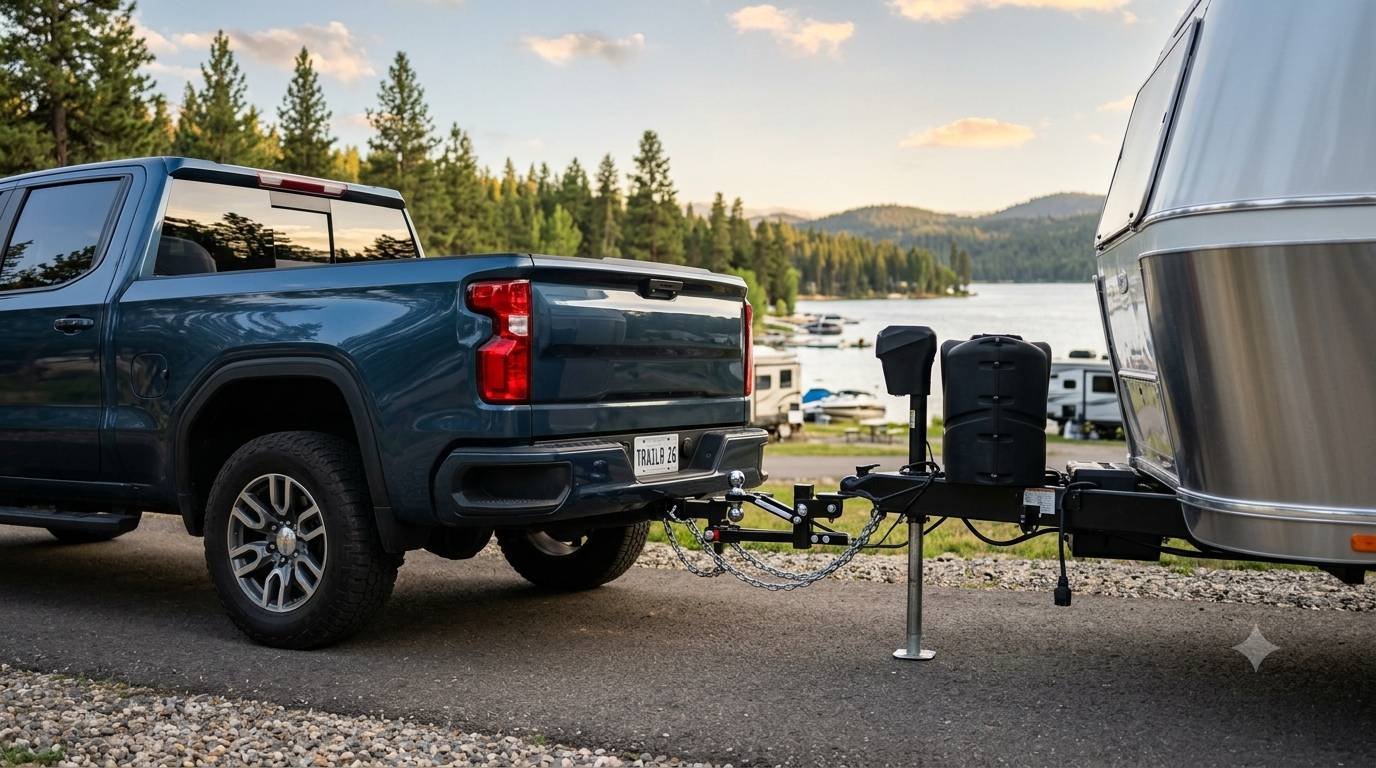
Matching a trailer hitch to a truck and trailer is about more than finding a ball mount that fits the receiver. A safe combination accounts for the truck’s ratings, the trailer’s loaded weight, tongue weight, axle limits, and the towing you plan to do. Drivers comparing Ford trailer hitches, for example, should start with the exact specifications for their truck rather than choosing equipment based solely on appearance or vehicle size.
A properly matched setup can make a utility trailer, boat, camper, or equipment trailer easier to control. More importantly, it helps avoid overloading the receiver, rear axle, tires, suspension, or trailer coupler. Follow the process below before buying or installing towing equipment.
Start With the Numbers
Gather the truck’s maximum trailer weight rating, payload rating, gross vehicle weight rating, gross combined weight rating, rear axle rating, and receiver rating. These details are usually found in the owner’s manual, on the driver-side door label, in the manufacturer’s towing guide, or on a factory-installed receiver label.
The practical limit is always the lowest-rated part of the combination. Installing a higher-capacity hitch does not increase the truck’s factory tow rating, payload capacity, axle rating, or brake capability. Check the trailer information plate as well, especially its gross vehicle weight rating and tire limits.
Calculate the Trailer’s Real Loaded Weight
Dry weight is only the trailer as it left the factory, often without water, fuel, batteries, tools, cargo, or optional equipment. What matters on the road is the loaded trailer weight. Add everything that will travel in or on the trailer.
- Empty trailer: 3,200 pounds
- Cargo and tools: 700 pounds
- Water, fuel, and supplies: 250 pounds
- Estimated loaded trailer weight: 4,150 pounds
That difference can be substantial. Camping gear, coolers, generators, spare tires, and work equipment can quickly turn a light trailer into a load that exceeds the capacity expected.
Choose the Hitch Type for the Job
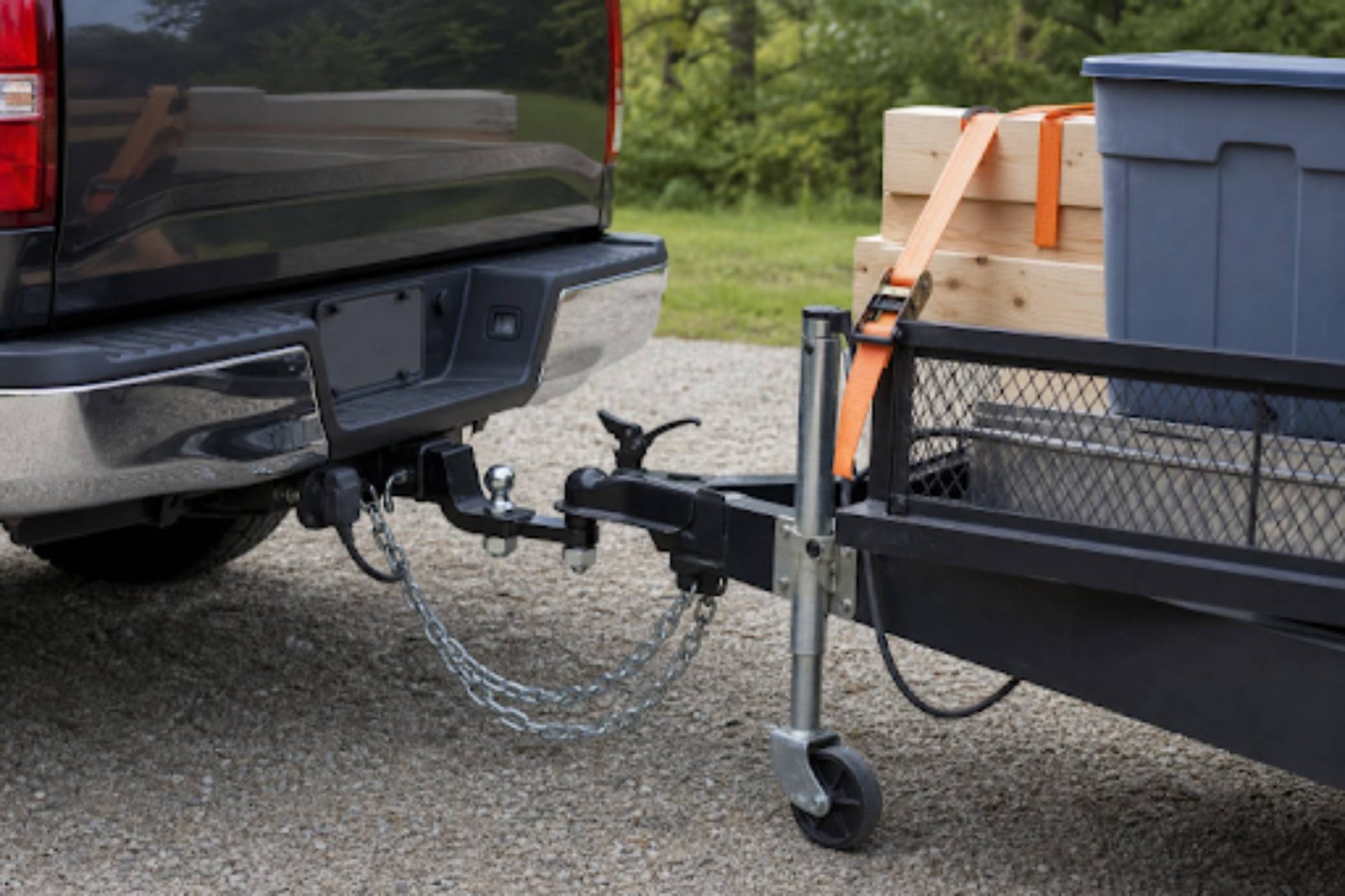
A rear receiver hitch is common for utility trailers, small campers, boats, cargo carriers, and bike racks. A weight-carrying ball mount may suit lighter trailers within the vehicle’s ratings. Larger trailers may require a weight-distribution system to transfer some load forward onto the truck’s front axle and rearward toward the trailer axles.
Gooseneck and fifth-wheel hitches are different systems designed for compatible truck-bed trailers, often including heavy equipment, livestock, or larger RV trailers. They are not interchangeable with a bumper-mounted receiver setup. The truck bed, trailer coupler, mounting hardware, payload rating, and clearances must all be appropriate for the system.
Match the Receiver, Hitch Class, and Ball
Verify the receiver opening before selecting a ball mount. Common receiver sizes include 1.25-inch, 2-inch, 2.5-inch, and 3-inch openings. The shank must fit correctly, and the hitch pin and retaining clip must be sized for that receiver.
Hitch classes can provide a starting point, but they are not a substitute for checking every rating. Also, confirm the hitch ball diameter matches the trailer coupler. A ball that is too small can create a dangerous connection, while a larger ball will not fit a smaller coupler.
Check Tongue Weight and Hitch Height
Tongue weight is the downward force the trailer applies to the hitch. Too little can contribute to sway. Too much can overload the truck’s receiver, rear axle, tires, or suspension. Load heavy items low and near the trailer axles, then measure tongue weight with an appropriate scale when the trailer is loaded for use.
Next, compare the truck’s receiver height with the trailer coupler height. Use a ball mount with the needed rise or drop so the trailer sits level or close to level when connected. A trailer that points sharply up or down can affect tire loading, braking, steering feel, and stability.
Do Not Skip Wiring, Brakes, and Safety Chains
A hitch setup is incomplete without working lights, a properly connected wiring plug, safety chains, a secured coupler latch, and trailer brakes when required. If the trailer has electric brakes, test the brake controller before leaving. Attach the breakaway cable to the tow vehicle separately from the chains, following the trailer manufacturer’s instructions.
Secure the cargo in the trailer as carefully as you secure the hitch itself. The National Highway Traffic Safety Administration’s load-security guidance notes that unsecured loads not only endanger you but also other drivers and pedestrians. Check straps, tie-down points, doors, ramps, and covers after loading and again during longer trips.
Know When Weight Distribution Makes Sense
Consider a weight-distribution setup when a connected trailer causes significant rear-end sag, makes steering feel unusually light, or creates poor handling. It must be compatible with the truck, receiver, trailer frame, and braking system. Follow the system manufacturer’s adjustment instructions exactly, as improperly adjusted spring bars can create handling and equipment problems.
Decide Between DIY and Professional Installation
DIY installation can be reasonable when the truck has factory mounting points, the instructions are clear, and you have the correct tools, including a torque wrench. Professional installation is often the better choice for frame drilling, brake controllers, wiring diagnostics, gooseneck hardware, fifth-wheel rails, or unfamiliar weight-distribution equipment.
Every frame-mounted fastener should be tightened to the specified torque. Visual inspection alone cannot confirm that a hitch is securely installed or that a connection is within its rated limits.
Follow a Five-Minute Pre-Trip Hitch Check
- Inspect the receiver, ball mount, hitch ball, pin, and retaining clip.
- Confirm the coupler is fully seated, latched, and secured.
- Cross the safety chains beneath the coupler without allowing them to drag.
- Connect the breakaway cable and test the trailer lights and brakes.
- Walk around the truck and trailer to inspect tires, cargo, straps, doors, and ramps.
Commercial operators should also understand the safety principle behind secondary coupling devices. The Federal Motor Carrier Safety Administration’s coupling guidance explains why every full trailer must be coupled to the frame, or an extension of the frame, of the motor vehicle that tows it with one or more safety devices to prevent the towed vehicle from breaking loose in the event the tow-bar fails or becomes disconnected.
Avoid Common Hitch-Matching Mistakes
- Choosing equipment based only on the truck’s size or appearance.
- Using the empty trailer weight instead of the loaded weight.
- Ignoring payload, tire, receiver, or rear axle limits.
- Using the wrong ball diameter or an improperly sized ball mount.
- Skipping tongue-weight and trailer-level checks.
- Assuming a stronger hitch raises the vehicle’s factory towing capacity.
- Leaving without testing the lights, brakes, chains, and the coupler latch.
Conclusion
The right trailer hitch is the one that matches the truck, trailer, load, and towing conditions as a complete system. Confirm the ratings, calculate loaded weight, measure tongue weight, level the trailer, and inspect every connection before departure. When a setup is close to its limits or difficult to evaluate, a qualified towing professional can help verify that the entire combination is ready for the road.