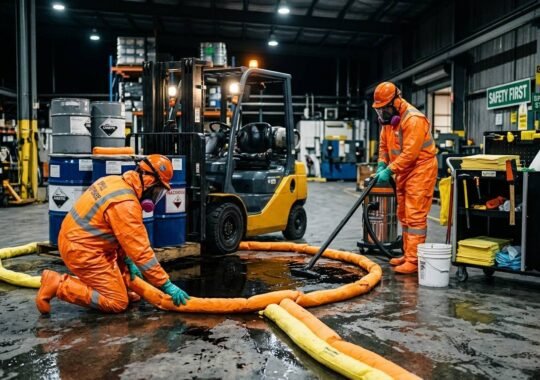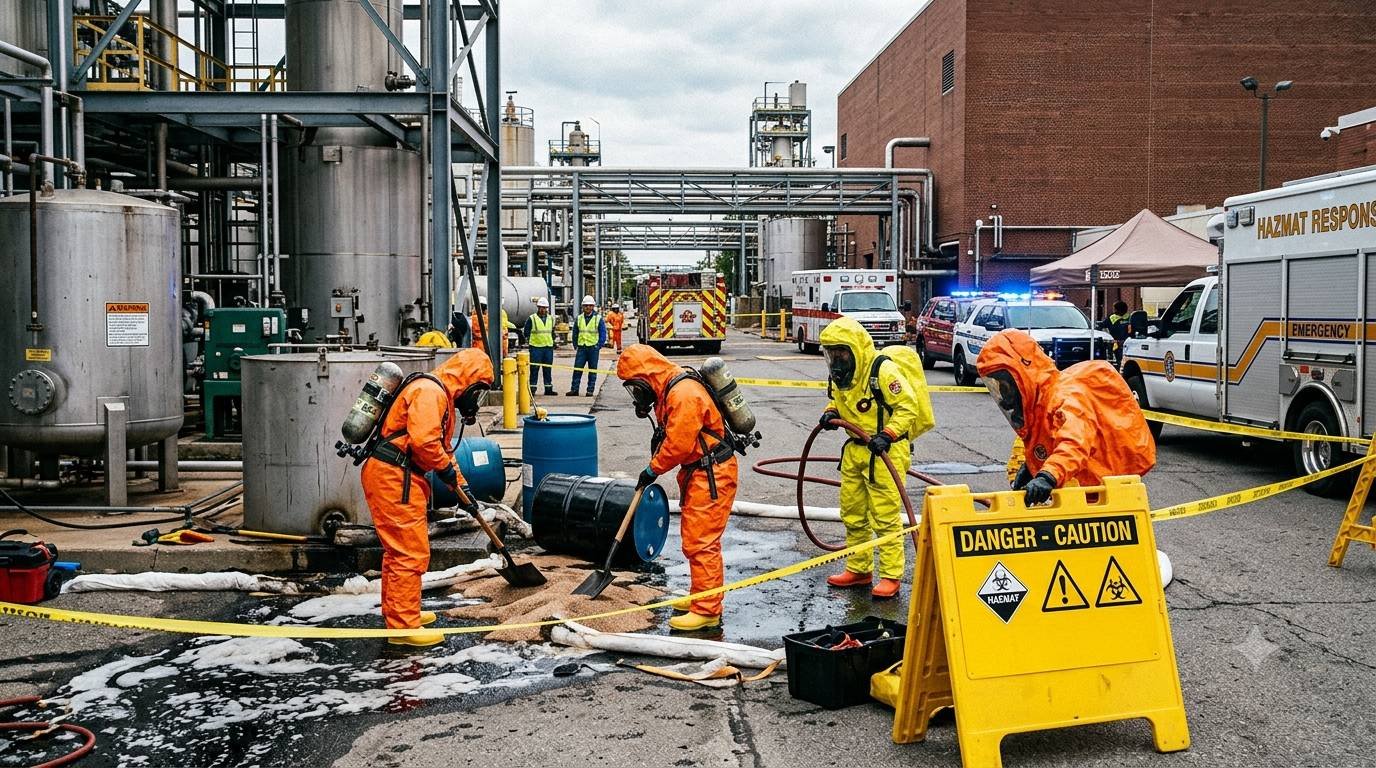
Hazardous material incidents can happen in industrial facilities, warehouses, laboratories, transportation areas, construction sites, and commercial properties. A chemical spill, fuel leak, unknown substance, or damaged container can create immediate concerns for workers, visitors, nearby properties, and the surrounding environment.
The first priority during any hazardous materials incident is safety. Attempting to clean up an unknown or dangerous substance without appropriate training and equipment can increase exposure risks and spread contamination. Professional responders can help evaluate the situation, establish appropriate controls, and coordinate cleanup based on the material and conditions involved.
Recognizing a Hazardous Material Emergency
A hazardous materials emergency may involve spilled chemicals, petroleum products, industrial liquids, compressed gases, contaminated materials, or substances that present fire, health, or environmental concerns.
Warning signs can include unusual odors, visible vapors, leaking containers, damaged drums, discolored liquids, or an unknown substance spreading across a work area. However, the absence of an obvious warning sign does not necessarily mean an area is safe.
When a potentially dangerous substance is discovered, employees should follow established emergency procedures and avoid unnecessary contact with the material.
Professional Emergency HazMat Response can provide trained assistance when a situation requires specialized knowledge, protective equipment, containment methods, and appropriate cleanup procedures.
Why Immediate Response Matters
A spill can change quickly depending on the substance, quantity, temperature, ventilation, and surrounding environment. A liquid may spread across floors, enter drainage systems, or reach soil before the problem is fully recognized.
Fast action can help limit the area affected and reduce the possibility of additional exposure. Professional responders can assess the incident, determine appropriate containment measures, and establish a controlled work area.
The response may involve spill containment, removal of contaminated materials, environmental cleanup, decontamination, waste handling, and documentation depending on the circumstances.
Common Situations Requiring HazMat Assistance
Hazardous material response can be necessary for many different incidents. Fuel and petroleum spills are common concerns at transportation facilities, equipment yards, manufacturing properties, and commercial sites.
Chemical releases can occur during storage, manufacturing, transfer, or transportation. Damaged containers can also create unexpected leaks that require immediate attention.
Other incidents may involve unknown substances, industrial waste, contaminated equipment, or materials affected by a fire or accident.
Each situation should be evaluated individually because the appropriate response depends on the substance involved and the potential hazards it presents.
Finding Emergency HazMat Response Services Near Me
When a hazardous material incident occurs, businesses may search for Emergency HazMat Response Services Near Me to locate qualified professionals who can respond to the situation.
Choosing a response provider should involve more than simply finding the fastest available service. Businesses should consider whether the provider has experience handling the type of incident involved and whether its personnel have the appropriate training and protective equipment.
A professional response team can also explain what information is needed before arriving, such as the known or suspected substance, approximate quantity, location of the spill, and whether anyone has been exposed.
Providing accurate information can help responders prepare for the situation without unnecessarily putting additional people at risk.
Containment Is an Important First Step
One of the primary goals of a hazardous spill response is preventing the material from spreading. Depending on the substance and circumstances, responders may use appropriate containment materials or other specialized techniques.
Containment can help prevent a spill from reaching drains, soil, waterways, or other sensitive areas. It can also help establish a safer work zone for subsequent cleanup.
Employees should not attempt to contain a hazardous substance unless they are specifically trained and authorized to do so. Using the wrong material or technique can sometimes make an incident worse.
Proper Cleanup Requires More Than Removing the Visible Spill
Cleaning a hazardous substance is not simply a matter of wiping up what can be seen. Contaminated surfaces, absorbent materials, equipment, soil, or other items may require additional handling.
Professional environmental cleanup teams can evaluate affected areas and determine what materials need to be removed, cleaned, or treated.
Depending on the incident, specialized equipment may be used to collect liquids, recover contaminated materials, or remove impacted substances from difficult locations.
The goal is to address the source and affected areas rather than simply making the visible spill disappear.
Safe Handling of Hazardous Waste
Materials collected during a hazardous spill can themselves require careful handling. Used absorbents, contaminated protective equipment, damaged containers, and recovered substances may need to be managed as regulated waste depending on their characteristics and applicable requirements.
Improper disposal can create additional environmental and compliance problems.
Professional response companies can help identify appropriate handling and disposal procedures based on the material involved and applicable regulations.
Protecting Workers and the Environment
A hazardous material incident can affect more than the immediate spill area. Vapors may move through enclosed spaces, liquids can migrate across surfaces, and outdoor releases may affect soil or drainage systems.
Establishing appropriate exclusion zones and limiting access can help reduce unnecessary exposure while the situation is being assessed.
Environmental considerations are also important. Preventing a substance from entering storm drains, waterways, or soil can help limit the broader impact of an incident.
Preparing Before an Incident Happens
Businesses that handle chemicals, fuels, oils, or other hazardous materials should have emergency procedures in place before an incident occurs.
Employees should know how to report a spill, whom to contact, where emergency information is located, and when they should evacuate an area rather than attempting to respond.
Facilities can also review storage practices, container labeling, spill prevention procedures, and emergency contact information regularly.
Preparation does not eliminate the possibility of an incident, but it can help employees respond more consistently when something goes wrong.
What Information Responders May Need
When contacting a professional response team, provide as much accurate information as possible without approaching the hazardous area unnecessarily.
Useful information may include the substance involved, approximate quantity, location, whether the material is indoors or outdoors, whether it has entered a drain or waterway, and whether anyone has been exposed.
If the substance is unknown, say so. Guessing the identity of a material can create unnecessary risks. Responders can use available information and appropriate assessment procedures to determine how to approach the incident.
The Value of Professional Response
Hazardous material incidents can create complicated safety, environmental, and cleanup challenges. A professional response can help businesses move from immediate containment toward controlled cleanup and restoration.
Emergency HazMat Response is particularly important when a spill involves an unknown substance, potentially dangerous chemicals, petroleum products, contaminated materials, or conditions beyond the capabilities of ordinary maintenance staff.
For businesses searching for Emergency HazMat Response Services Near Me, selecting a qualified response provider before an emergency occurs can make future incidents easier to manage. Having reliable emergency contacts, clear procedures, and trained professionals available can help protect employees, property, and the environment when an unexpected hazardous material incident occurs.