Key Takeaways
- Optimize your air conditioning settings to balance comfort and energy efficiency.
- Implement passive cooling techniques to naturally reduce indoor temperatures.
- Regular maintenance of cooling systems enhances performance and longevity.
Table of Contents
- Optimize Your Air Conditioning Settings
- Implement Passive Cooling Techniques
- Regular Maintenance of Cooling Systems
- Utilize Smart Thermostats
- Choose Energy-Efficient Appliances
- Conclusion
As summer temperatures soar, keeping your home comfortably cool is essential. However, constantly running the air conditioner can lead to excessive energy costs. Thankfully, there are practical steps you can take to maintain a pleasant indoor environment and reduce your reliance on cooling systems. Homeowners looking for faster solutions can also explore professional AC repair in Princeton, NJ to make sure their systems operate efficiently throughout the season.
Implementing smart cooling strategies can significantly reduce energy costs while keeping your home comfortable during the summer. By adjusting air conditioner settings and utilizing smart thermostats, homeowners can make small changes that lead to substantial savings. These practices not only help maintain a budget-friendly household but also encourage sustainable energy habits for the long term. Whether one opts for minor tweaks or larger home upgrades, these effective strategies are designed to enhance cooling, lower utility bills, and extend the lifespan of HVAC systems. The U.S. Department of Energy also provides valuable resources to further improve home energy efficiency and manage electricity costs.
Optimize Your Air Conditioning Settings
Your thermostat’s settings play a crucial role in your energy consumption during hot weather. Experts suggest keeping your AC set between 75 and 78 degrees Fahrenheit while you are home to maintain comfort without unnecessary strain on your system. When leaving the house, increasing the setting by 7 to 10 degrees can result in noticeable savings over the course of a season.
For even greater efficiency, be sure your air conditioning fan is set to “Auto” rather than “On.” The “Auto” function ensures the fan runs only when cooling is required, using less electricity than continuous operation. More tips about optimal AC usage are available from Scientific American.
Implement Passive Cooling Techniques
Relying on passive cooling strategies reduces your dependence on air conditioning and lowers your monthly utility bill. Here are some practical approaches:
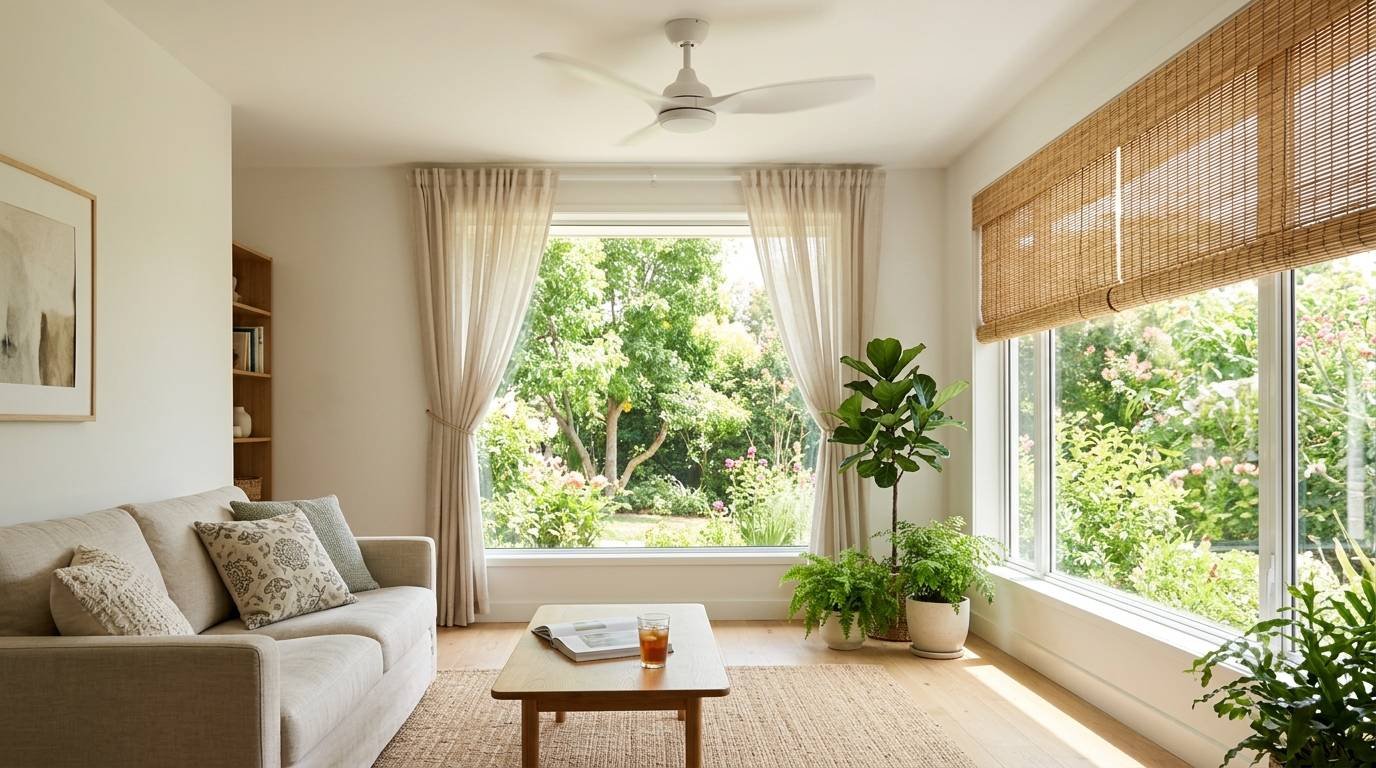
- Close Curtains and Blinds: Sunlight entering through windows can significantly heat up your living spaces. Use blackout curtains or thermal blinds, especially during peak sunlight hours, to block unwanted heat.
- Use Fans Strategically: Set ceiling fans to rotate counterclockwise to circulate cool air downward. Portable fans can also be positioned to increase airflow in occupied rooms. Remember to turn fans off when a room is empty, since fans cool people, not spaces.
- Limit Heat-Generating Appliances: Try to avoid using ovens, dishwashers, or other heat-generating appliances during the afternoon, when temperatures peak. Instead, opt for outdoor grilling or prepare meals in advance.
For a deeper dive into creative and effective passive cooling ideas, consult this comprehensive guide from Scientific American.
Regular Maintenance of Cooling Systems
Staying on top of your air conditioner’s maintenance is vital for both efficiency and long-term reliability. Basic efforts include:
- Change Air Filters Regularly: Dirty filters cause your system to work harder and reduce indoor air quality. Check and replace filters monthly during peak use and at least every 3 months otherwise.
- Schedule Professional Tune-Ups: A licensed HVAC technician can spot potential issues early, check refrigerant levels, and clean essential components, helping you avoid costly repairs and ensuring your system runs at peak performance.
Routine upkeep not only boosts efficiency but can also add years to your system’s lifespan.
Utilize Smart Thermostats
Smart thermostats offer a convenient way to automatically control your cooling costs. These devices adjust temperature settings based on your daily patterns and can be accessed from anywhere via smartphone apps. Over time, smart thermostats help reduce waste, leading to substantial utility savings and improved comfort all summer long.
Choose Energy-Efficient Appliances
When upgrading or replacing major appliances, select units bearing the ENERGY STAR label. Appliances with this certification meet rigorous EPA efficiency guidelines, consuming less power and reducing your monthly expenses. From air conditioners to refrigerators, making energy-conscious choices pays off in lower bills and a reduced environmental impact. The Department of Energy provides practical guidance on choosing efficient appliances and adopting energy-saving habits to reduce energy use during heat waves.
Conclusion
With the right combination of cooling strategies, you can keep your home comfortable during the summer while avoiding excessive energy costs. By optimizing AC settings, leveraging passive cooling, scheduling routine maintenance, using smart thermostat technology, and choosing energy-efficient appliances, you can lower your costs and make your living environment more sustainable. Adopting these habits puts you in control of your comfort and your budget, even as temperatures climb.